
Can a Punctured Tyre Be Repaired? UK Rules Explained
A puncture does not always mean a new tyre, but it does not always mean a repair either. In the UK, tyre repairs are governed by the British Standard BS AU 159, which sets strict, safety-based limits on what can and cannot be fixed. Here is a clear explanation of the rules so you know where you stand.
The minor repair area
BS AU 159 only permits repairs within the central part of the tread, known as the minor repair area. For most passenger car tyres this is roughly the central three-quarters of the tread width. Punctures inside this zone are usually repairable; punctures outside it, in the shoulder or sidewall, are not.
The reason is simple. The sidewall and shoulder flex the most as the tyre rolls and carries load, so a patch in those areas is very likely to fail. The central tread is far more stable, which is why a properly executed repair there can be permanent and safe.
When a puncture can be repaired
Under BS AU 159, a repair is allowed only when all of the following are true:
- The damage is within the central minor repair area of the tread
- The puncture is no more than 6mm in diameter
- The tyre still has at least the legal 1.6mm of tread across the central three-quarters
- There is no sidewall damage, cracking, or perishing
- The tyre has not been run flat or badly damaged internally
- There is no evidence of a previous unsafe repair
When a tyre must be replaced
A tyre cannot be safely or legally repaired if the puncture is in the sidewall or shoulder, if the hole is larger than 6mm, or if the tyre has been driven on while flat, which usually destroys the internal structure. Perished or badly worn tyres, and tyres with a previous poor repair, must also be replaced rather than patched again.
A temporary sealant from a tyre repair kit is only ever a get-you-home measure. It is not a permanent fix and the tyre must still be inspected by a professional afterwards.
How a proper repair is done
A correct repair is not a plug pushed in from the outside. The tyre is removed from the wheel and inspected inside and out, the damage is assessed against the standard, and a combination plug-patch is fitted from the inside to seal both the puncture channel and the inner liner. The tyre is then refitted and rebalanced. This is why a safe repair should always be carried out by a trained fitter, not with a roadside plug kit alone.
Getting it checked
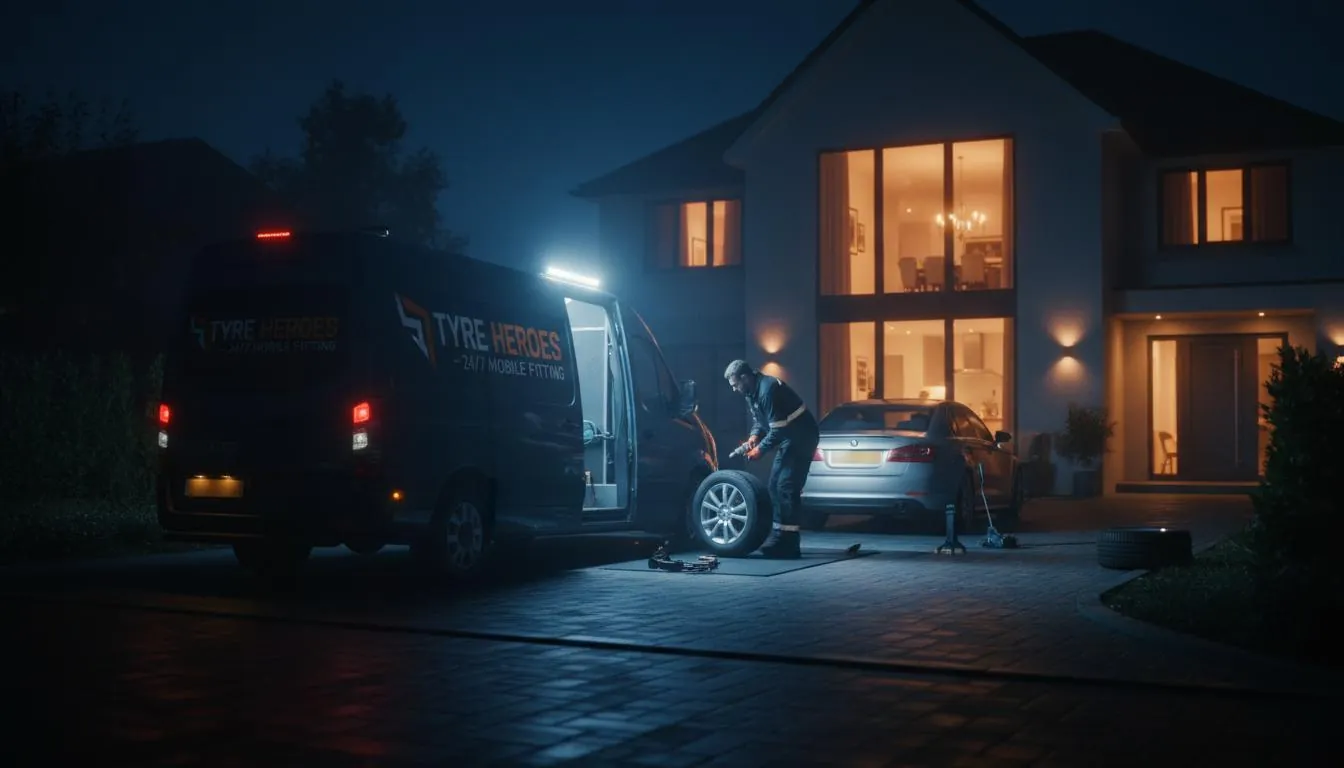
If you have picked up a puncture, the safest thing is to have it assessed promptly rather than driving on it. A mobile fitter can come to your home, work, or the roadside, judge whether the damage is repairable to British Standard, and either carry out a proper repair or supply and fit a replacement tyre on the spot. In an urgent case, our emergency mobile tyre fitting service can reach you fast.
Related services & guides
Need a Tyre Fitted Today?
We come to you 24/7, at home, work, or roadside. Average response 30-45 minutes.